GEO
GEO  ENG
ENG  ARM
ARM 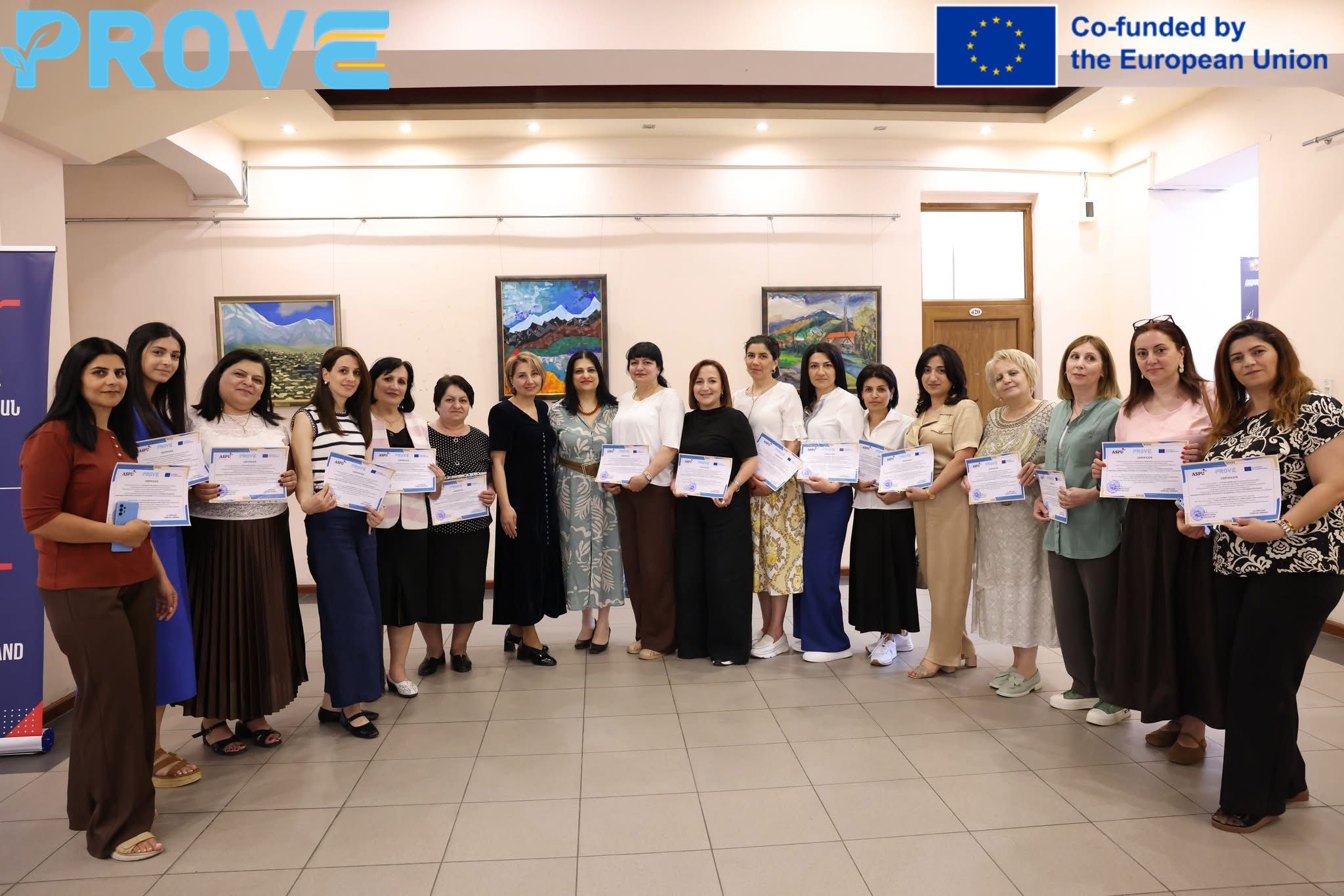
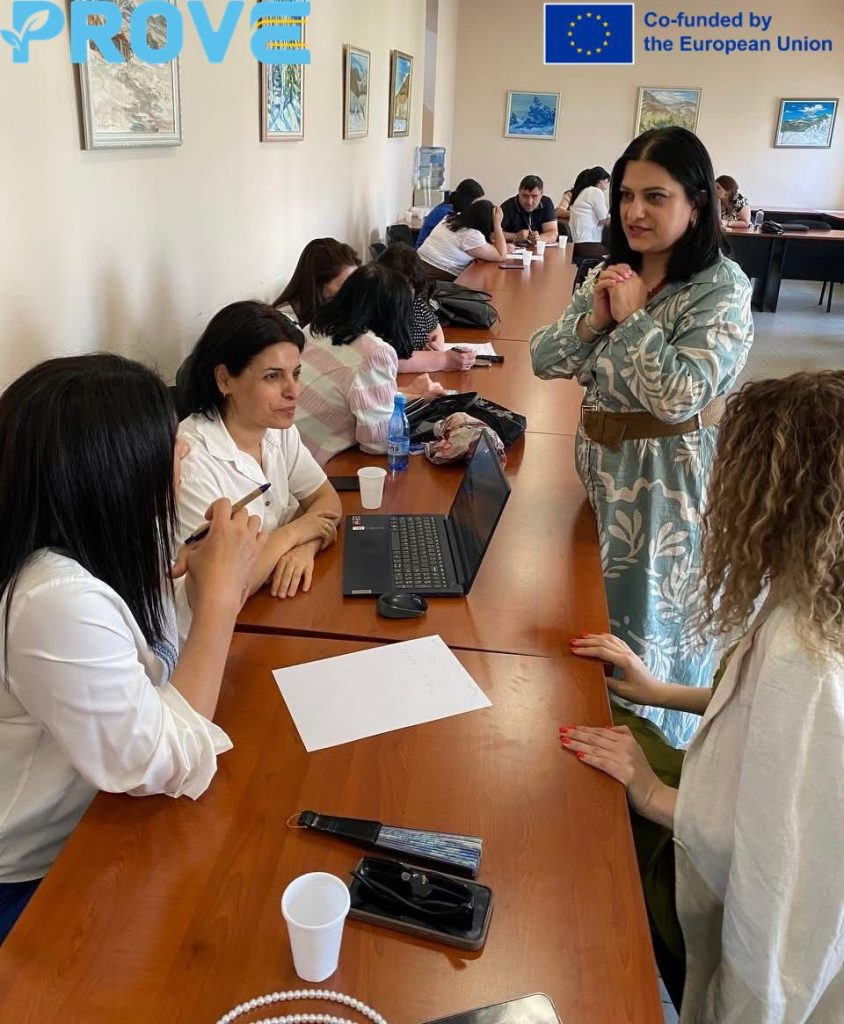
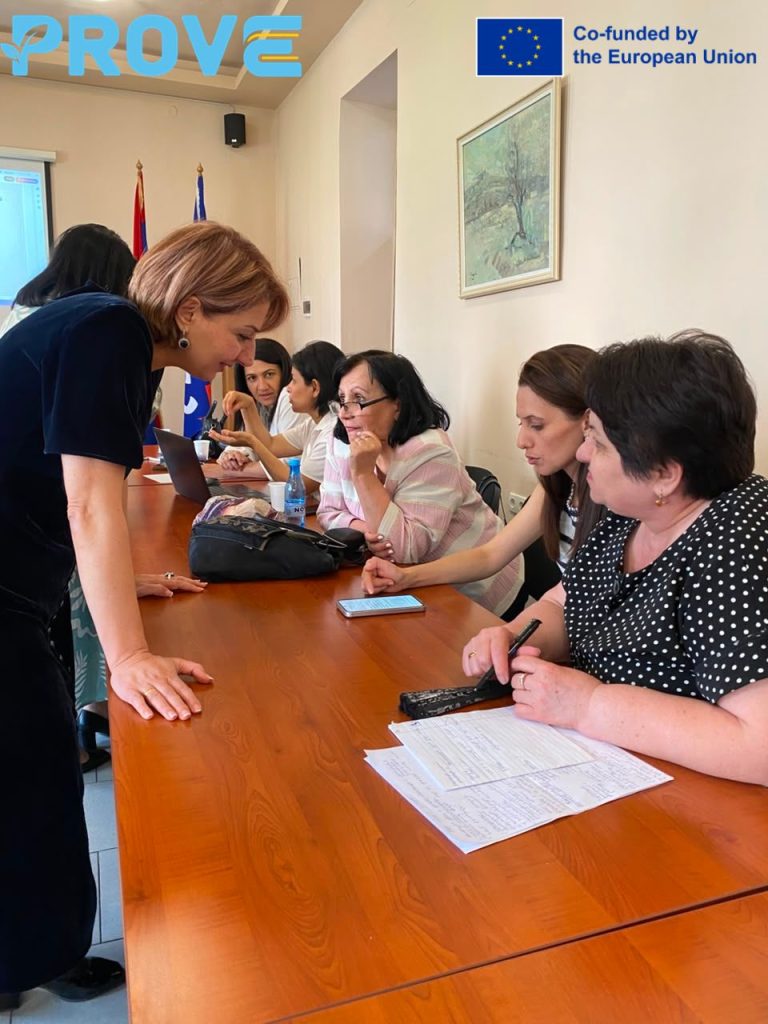
Erasmus+-ის პროექტის — „PROVE“ (ღირებულებითი განათლების ხელშეწყობა სამხრეთ კავკასიის უმაღლეს საგანმანათლებლო დაწესებულებებში) ფარგლებში, 10-12 ივნისს ხაჩატურ აბოვიანის სახელობის სომხეთის სახელმწიფო პედაგოგიურ უნივერსიტეტში მოქმედი მასწავლებლებისთვის სამდღიანი ტრენინგი ჩატარდა. ღონისძიება მე-2 სამუშაო პაკეტის (WP2) ფარგლებში იქნა ორგანიზებული.
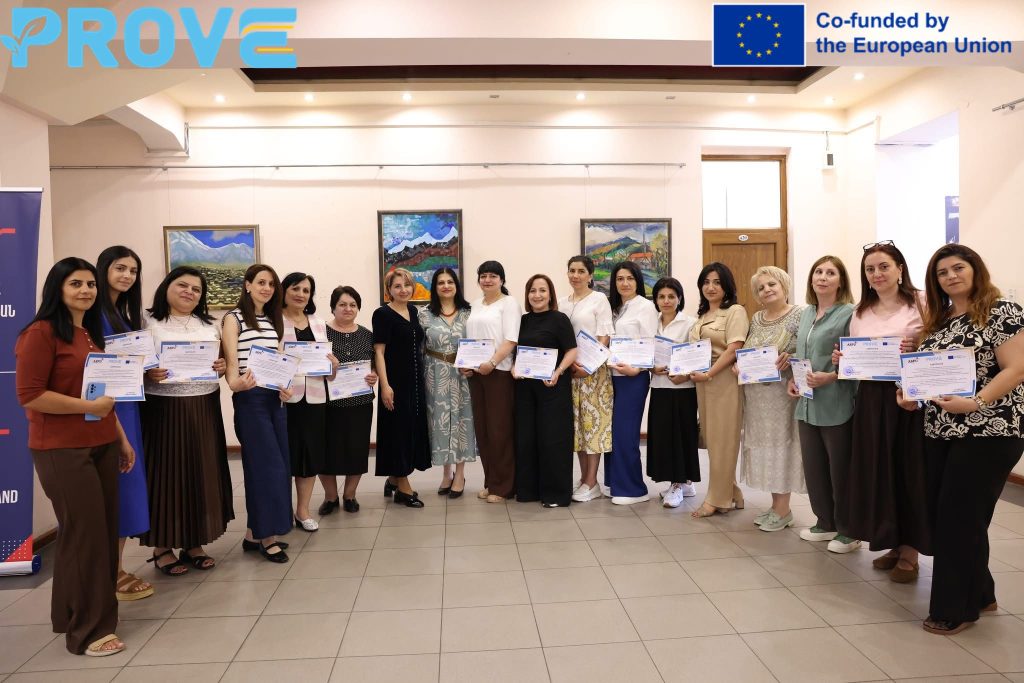
ტრენინგში მონაწილეობა მიიღო სხვადასხვა საგნობრივი მიმართულების 20-მდე მასწავლებელმა ზოგადსაგანმანათლებლო და სხვა სასწავლო დაწესებულებებიდან.
კურსს უძღვებოდნენ სამეცნიერო და საერთაშორისო თანამშრომლობის დარგში ბიოლოგიის, ქიმიისა და გეოგრაფიის ფაკულტეტის დეკანის მოადგილე მარინე მათოსიანი და გამოყენებითი ფსიქოლოგიის კათედრის გამგის მოვალეობის შემსრულებელი მარიანა ავეტისიანი.
სამდღიანი ინტენსიური ტრენინგი მთავარი საკითხი იყო VaKE (ღირებულებებსა და ცოდნაზე დაფუძნებული განათლება) მეთოდოლოგია, რომელიც ეფუძნება კონსტრუქტივისტულ საგანმანათლებლო მიდგომას. მონაწილეები გაეცნენ მეთოდოლოგიის თეორიულ საფუძვლებს, მისი გამოყენების სპეციფიკასა და სასწავლო პროცესში ღირებულებებსა და ცოდნაზე დაფუძნებული განათლების ინტეგრირების შესაძლებლობებს.
პრაქტიკული მუშაობისას მასწავლებლებმა შეისწავლეს ლოურენს კოლბერგის მორალური განვითარების თეორია და მორალური დილემების გამოყენების მექანიზმები, როგორც ეფექტური ინსტრუმენტი მოსწავლეთა ღირებულებებზე დაფუძნებული განსჯის, კრიტიკული აზროვნებისა და აკადემიური ცოდნის განსავითარებლად. მონაწილეებმა თავად შეიმუშავეს დილემები, გამართეს ჯგუფური დისკუსიები და გამოსცადეს VaKE მეთოდოლოგიის გამოყენების სხვადასხვა მოდელი.
კურსის ფარგლებში ასევე ყურადღება გამახვილდა განათლებაში ხელოვნური ინტელექტის (AI) გამოყენების შესაძლებლობებზე, კერძოდ, სასწავლო პროცესისთვის გამოსადეგი ისეთი საინტერესო და მრავალშრიანი დილემების შექმნის სტრატეგიებზე, რომლებიც ღირებულებით კომპონენტს შეიცავს.
ტრენინგის დასასრულს მონაწილეებს გადაეცათ სერტიფიკატები პროექტის ფარგლებში მათ მიერ ტრენინგის წარმატებით გავლისა და პროფესიული განვითარების დამადასტურებლად.
პროექტი დაფინანსებულია ევროკავშირის მიერ. თუმცა, გამოთქმული შეხედულებები და მოსაზრებები მხოლოდ ავტორის (ავტორების) პოზიციაა და შესაძლოა არ ასახავდეს ევროკავშირის ან ევროპის განათლებისა და კულტურის აღმასრულებელი სააგენტოს (EACEA) შეხედულებებს. მათზე პასუხისმგებლობა არ ეკისრება არც ევროკავშირს და არც გრანტის გამცემ ორგანოს.