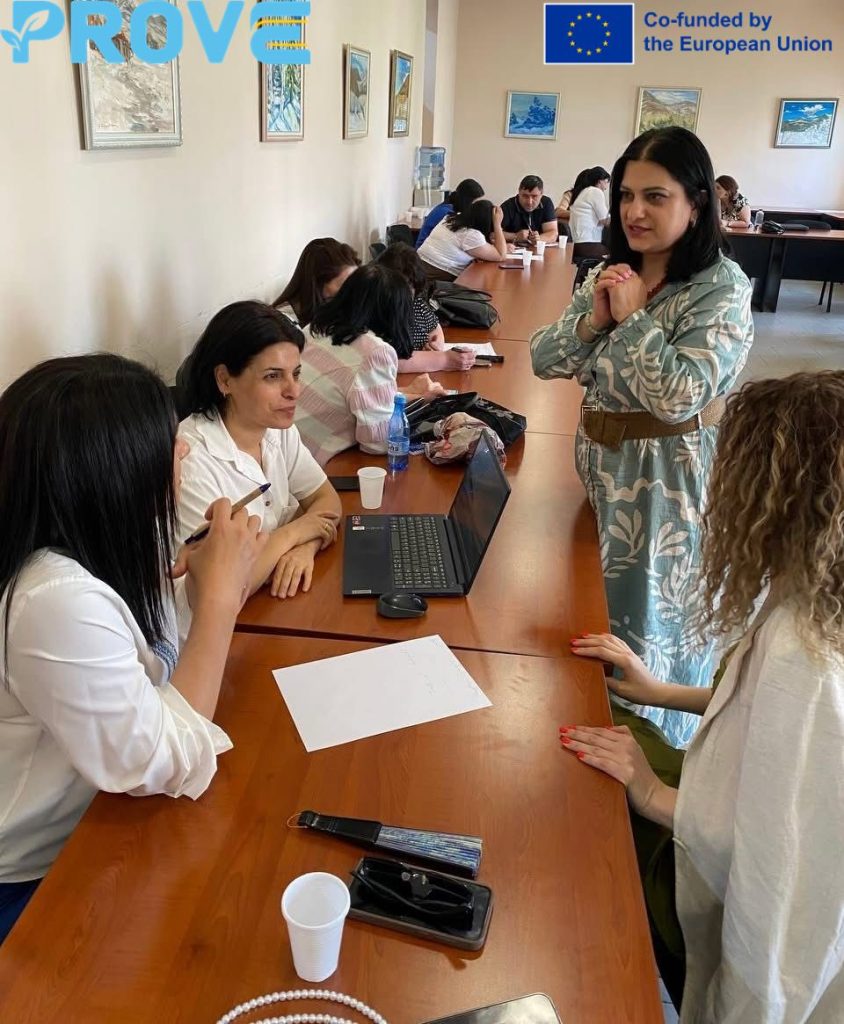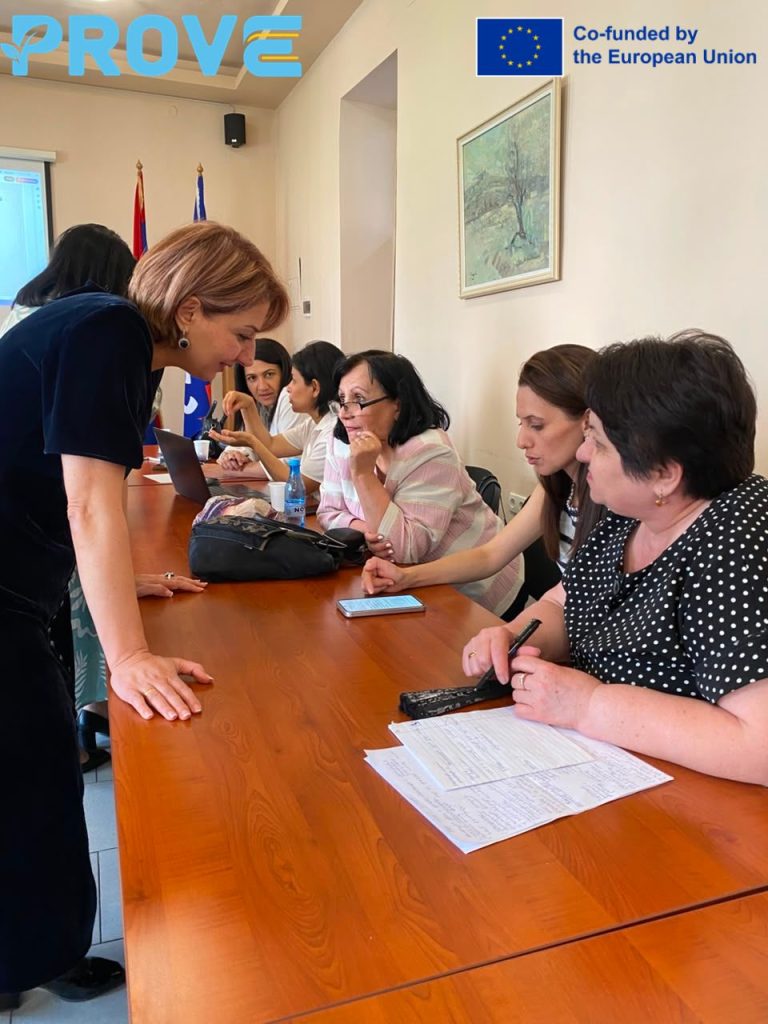
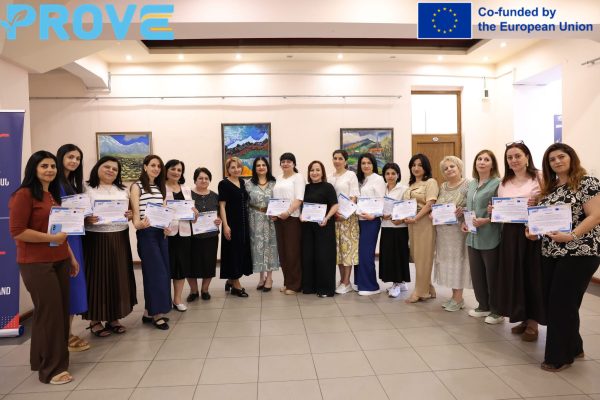
Within the framework of the Erasmus+ project “PROVE”: Promoting Values Education in Higher Education Institutions of the South Caucasus, a three-day training course for in-service teachers was held at Khachatur Abovyan Armenian State Pedagogical University on June 10-12. It was organized within the framework of Work Package 2 (WP2).
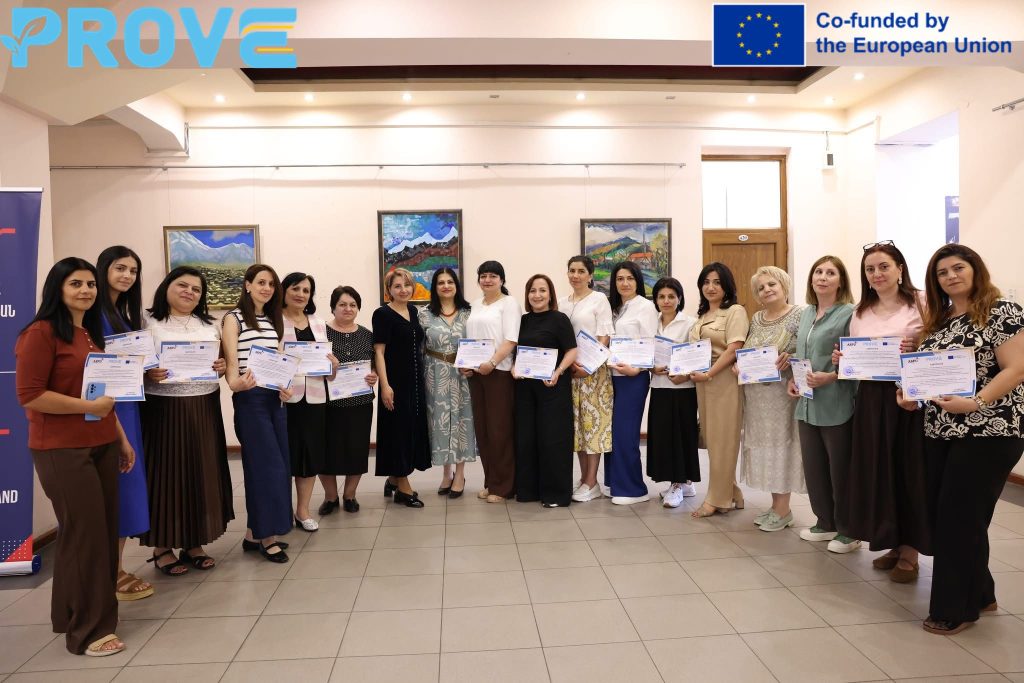
Around 20 teachers from general education and other educational institutions, representing various subject areas, participated in the training.
The course was conducted by Marine Matosyan, Deputy Dean for Science and International Cooperation of the Faculty of Biology, Chemistry and Geography, and Mariana Avetisyan, Acting Head of the Department of Applied Psychology.
The core of the three-day intensive training was the innovative VaKE (Values and Knowledge Education) methodology, which is based on a constructivist educational approach. Participants became familiar with the theoretical foundations of the methodology, the specifics of its application, and the possibilities of combining values and knowledge in the educational process.
During the practical work, the teachers studied Lawrence Kohlberg’s theory of moral development and the mechanisms of applying moral dilemmas as an effective tool for developing learners’ value-based judgments, critical thinking, and academic knowledge. The participants developed their own dilemmas, conducted group discussions, and tested different models of applying the VaKE methodology.
Within the scope of the course, the possibilities of using Artificial Intelligence (AI) in education were also presented, specifically for the purpose of creating engaging, multi-layered dilemmas containing a value component for the learning process.
At the end of the training, the participants were awarded certificates, testifying to their professional development and successful completion of the training within the framework of the project.
The PROVE project is funded by the European Union. Views and opinions expressed are however those of the author(s) only and do not necessarily reflect those of the European Union or The European Education and Culture Executive Agency (EACEA). Neither the European Union nor the granting authority can be held responsible for them.