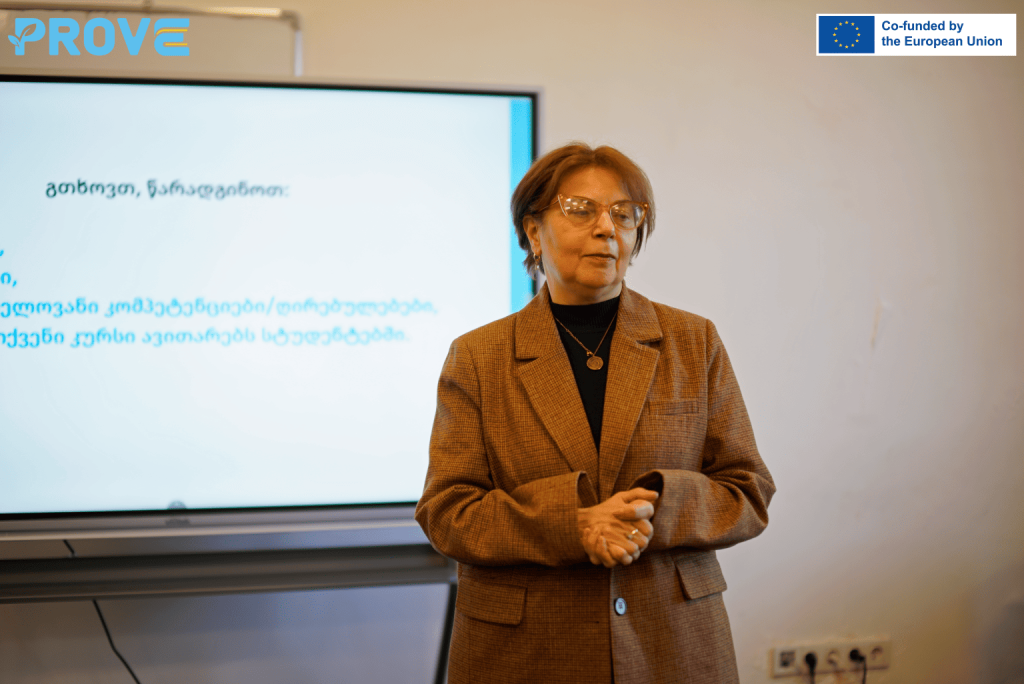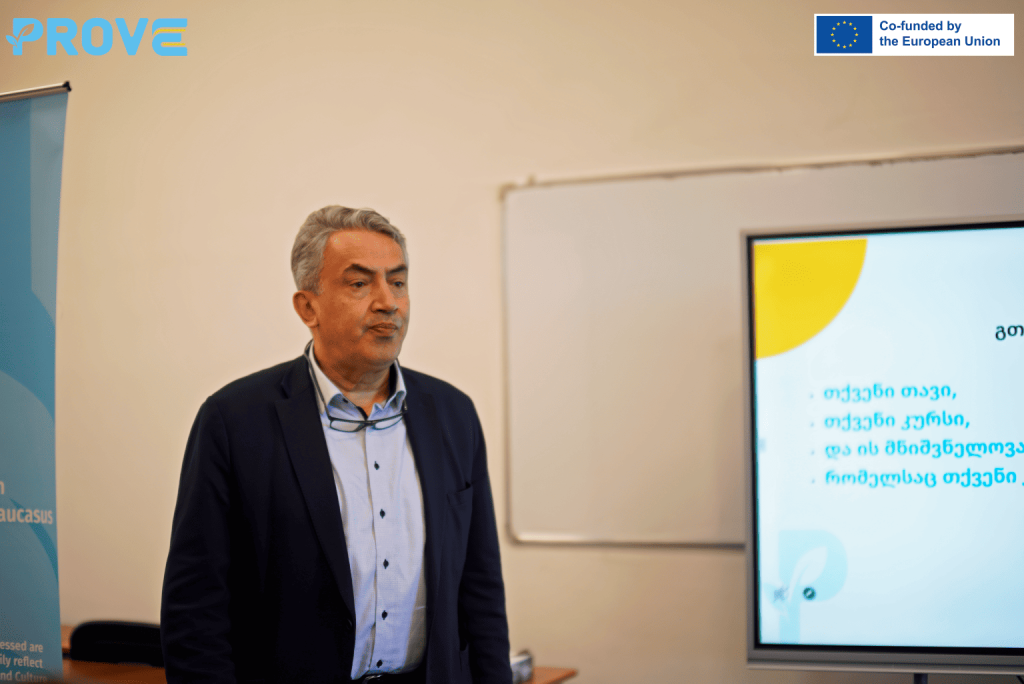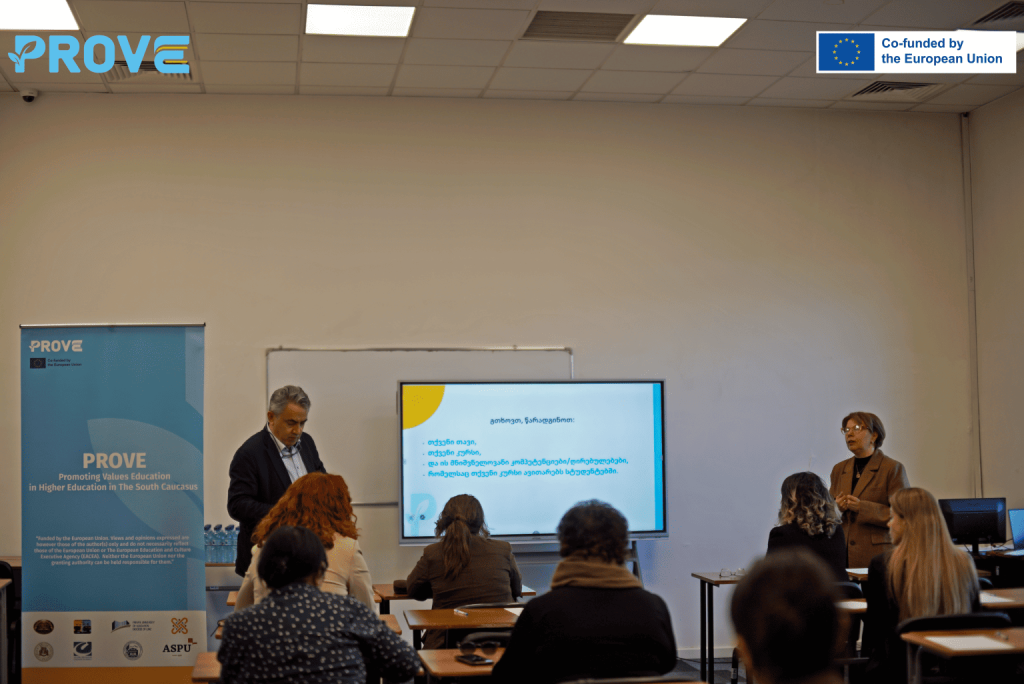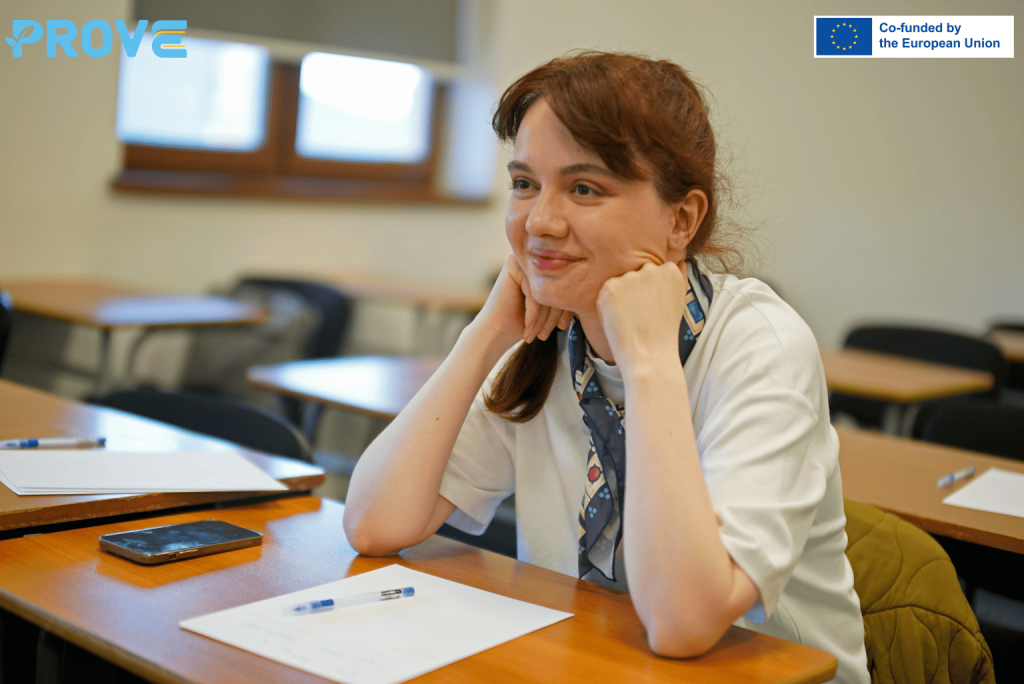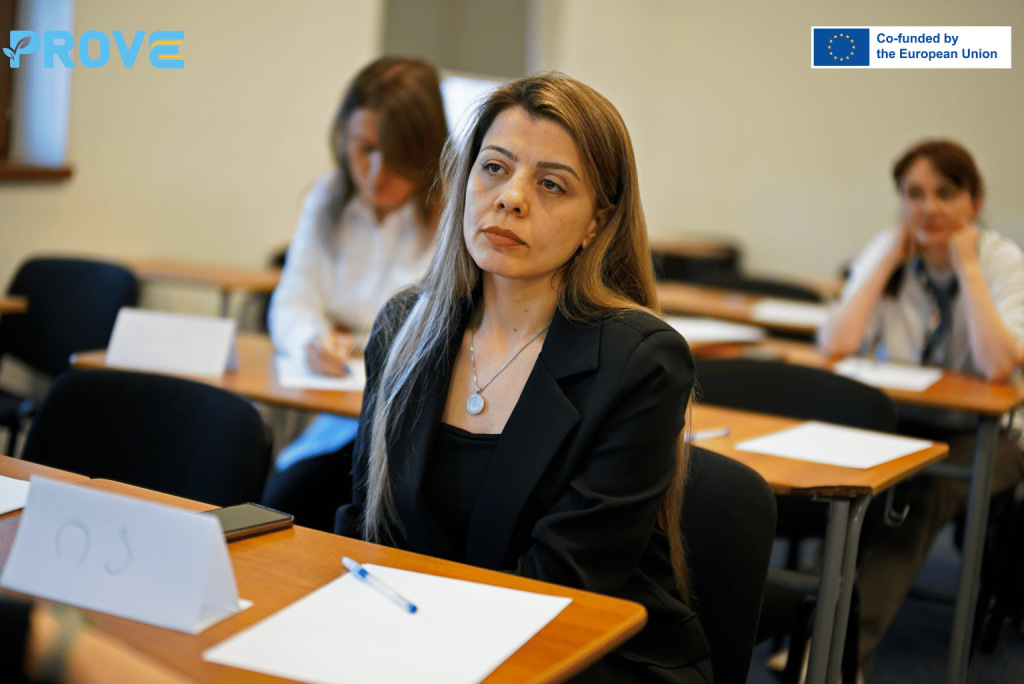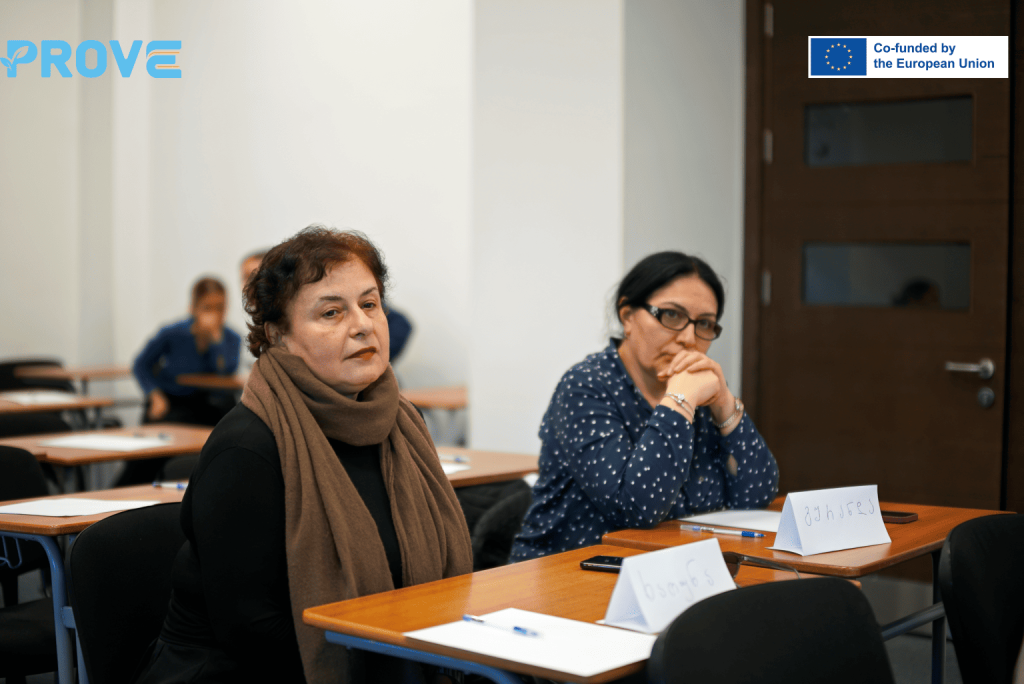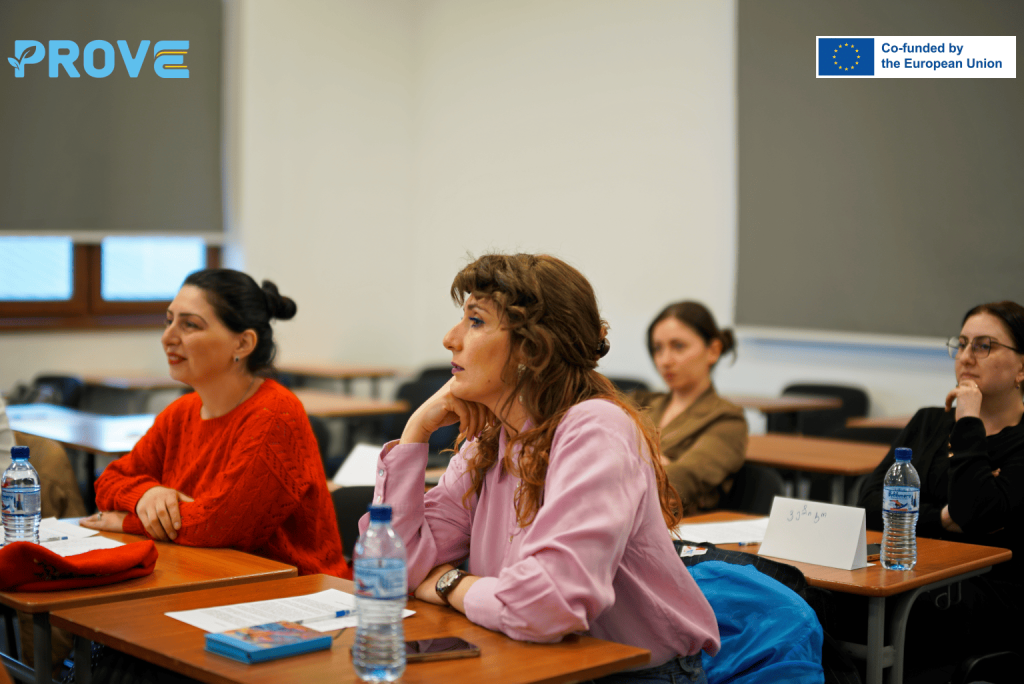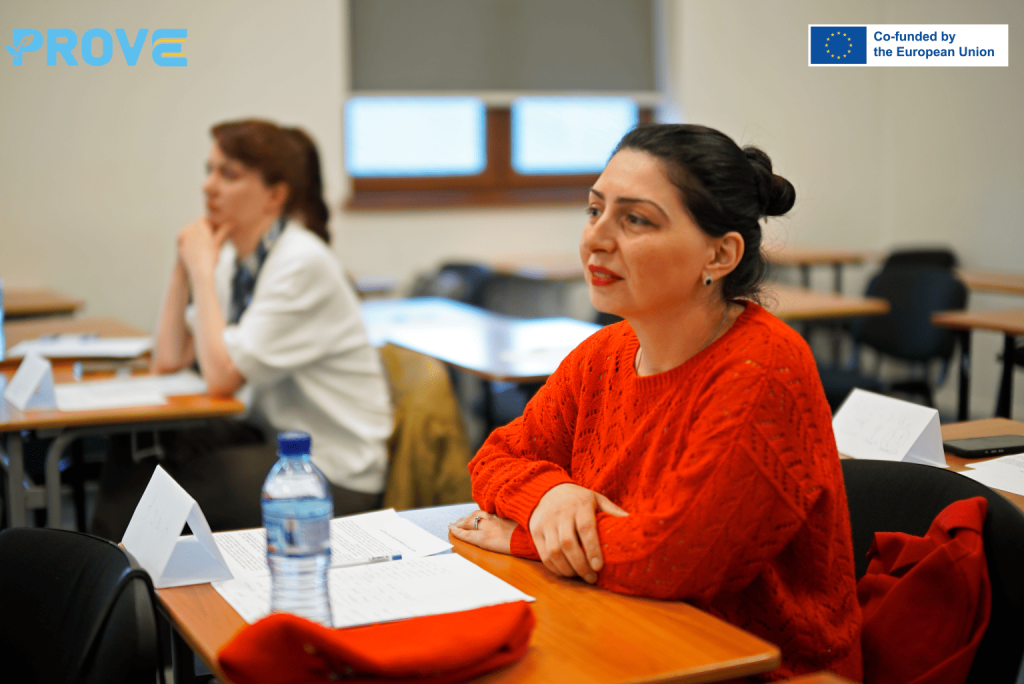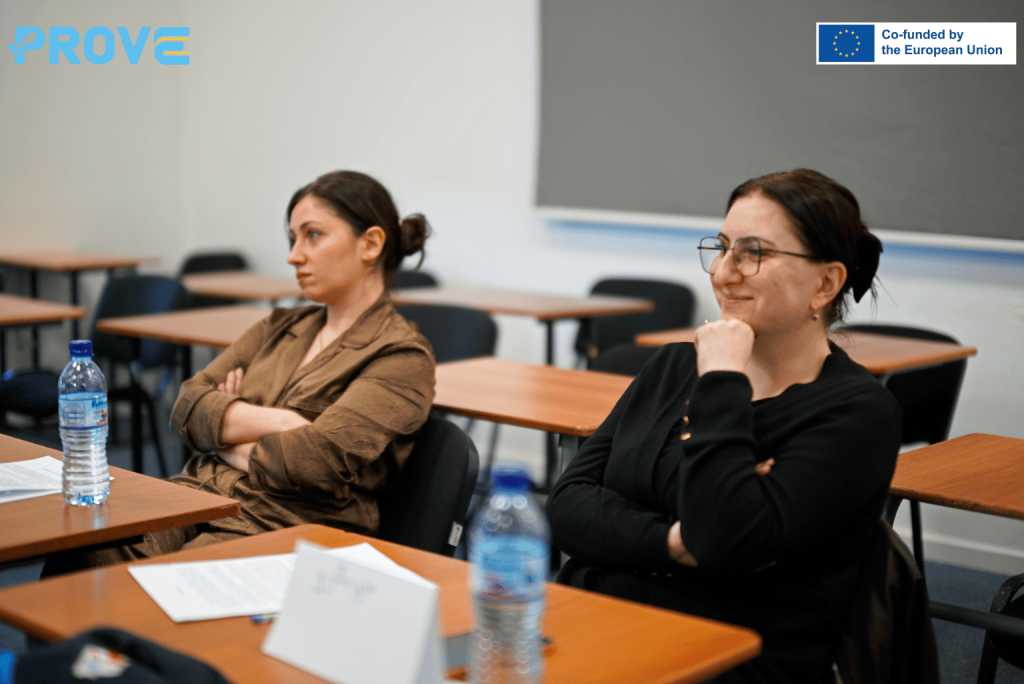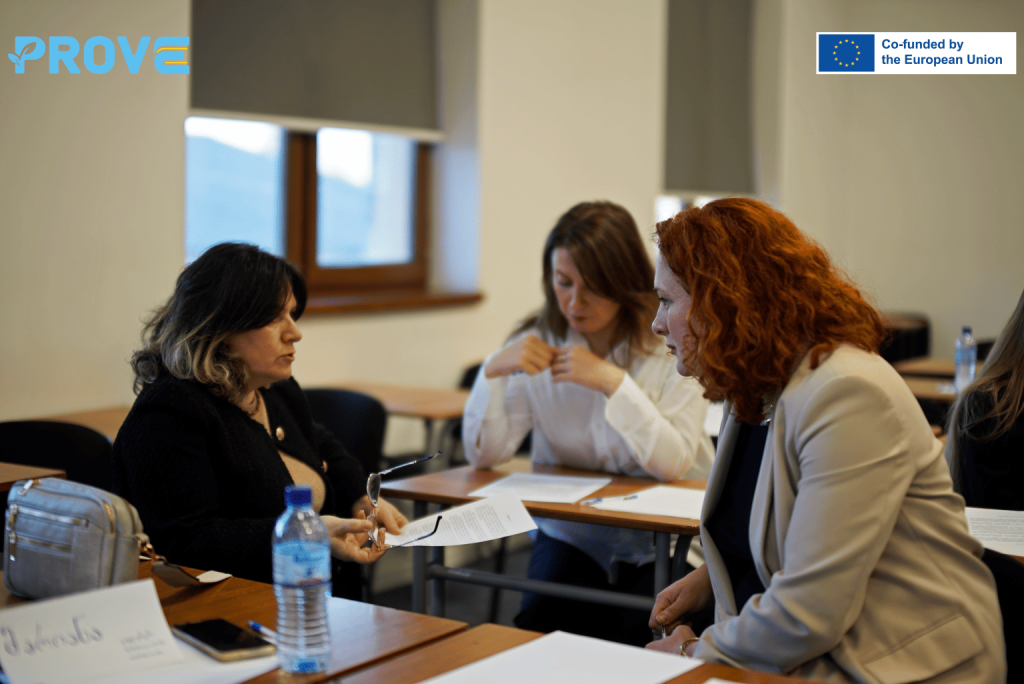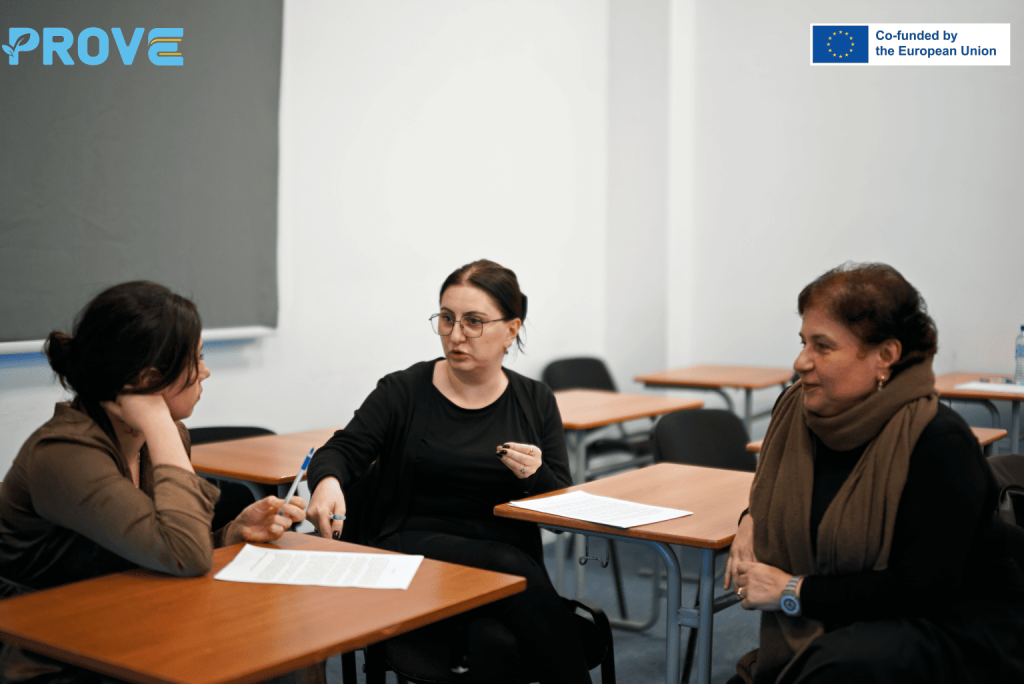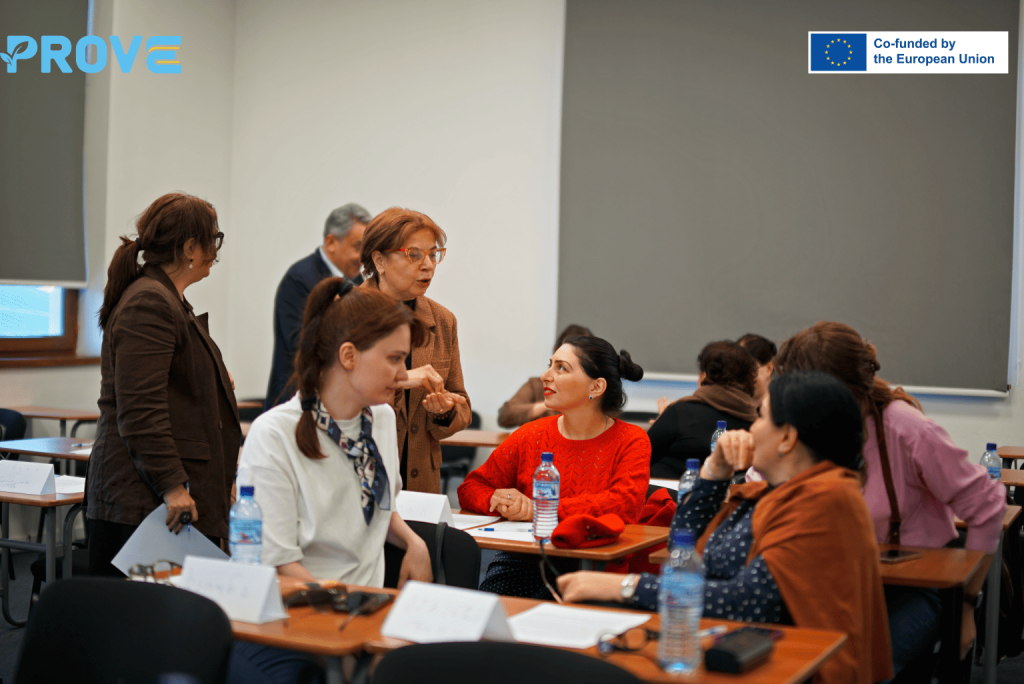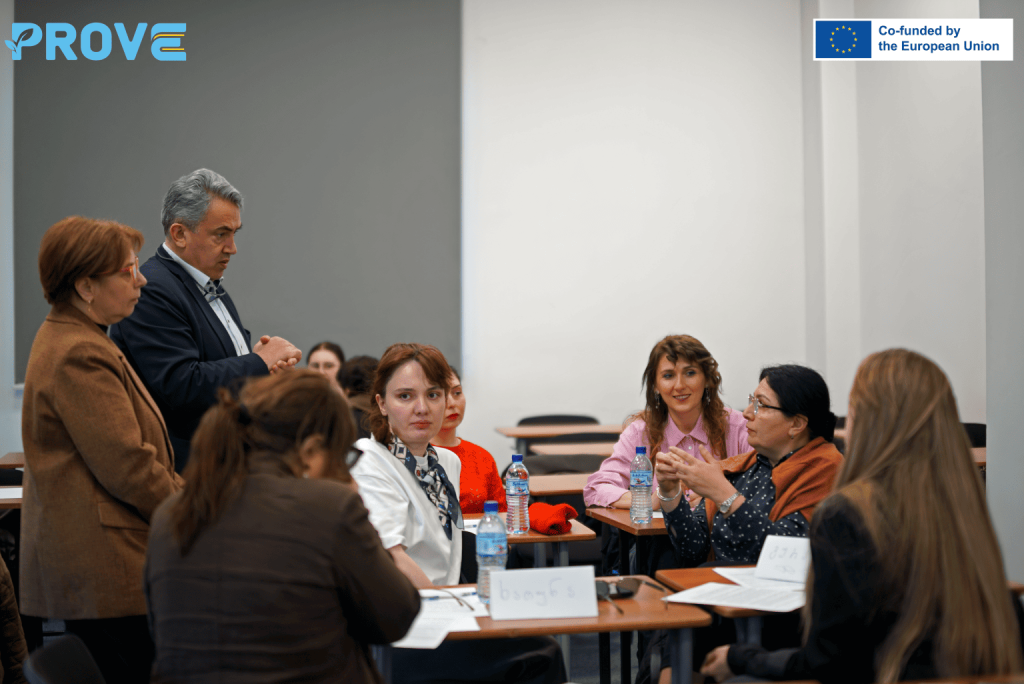

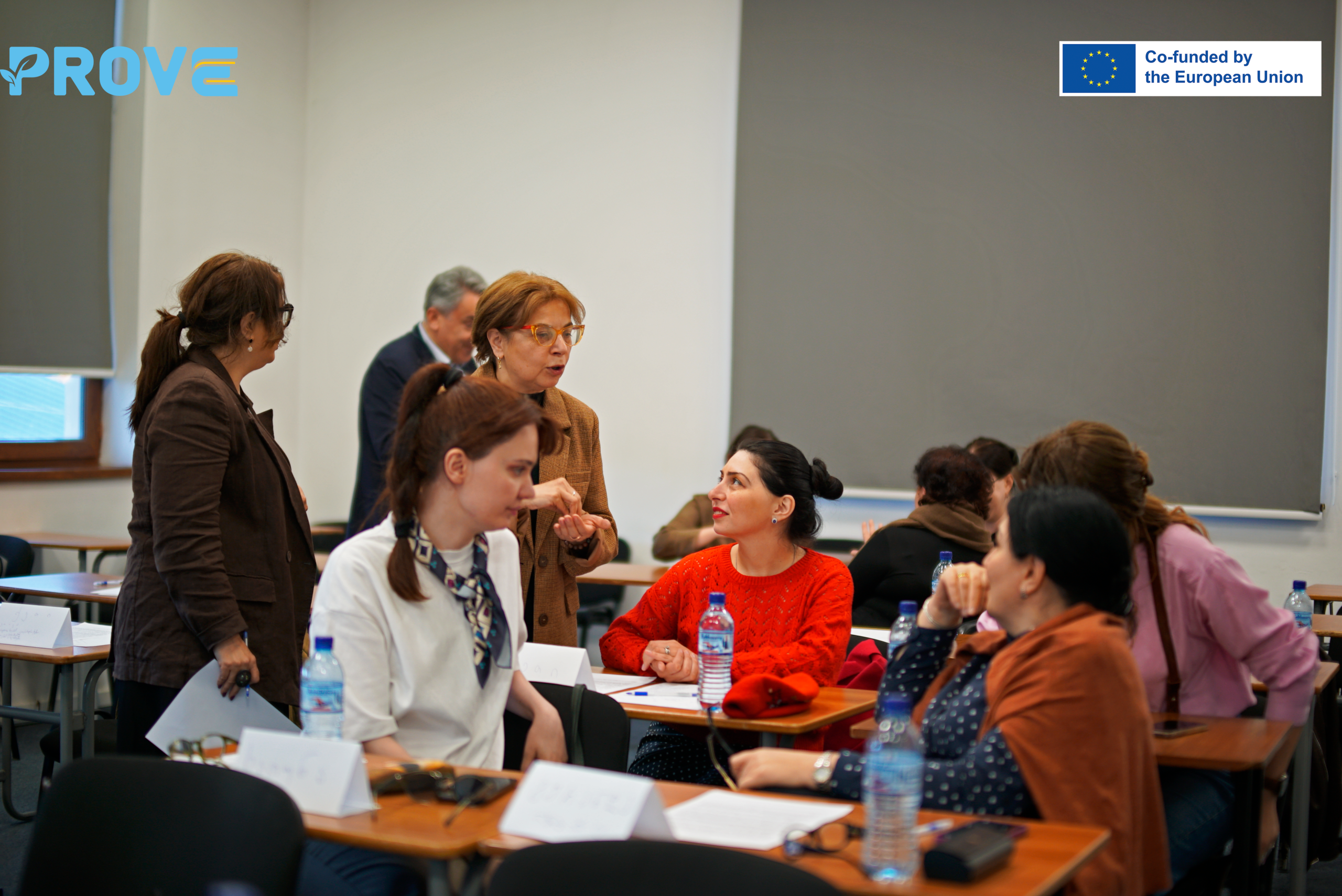
On April 22 and 24, Caucasus University hosted a two-day training session for its academic staff titled “How to Teach Values?” as part of the PROVE project.
The training aimed to familiarize academic staff with the concept of values education and demonstrate how academic content can serve as a powerful tool for nurturing values. It explored ways universities can cultivate professionals who embody ethical awareness, social responsibility, and critical thinking, especially in today’s globalized world shaped by artificial intelligence.
The training was delivered in a hybrid format, with the first day held in person and the second day conducted online.
Day one covered foundational topics such as the definition and classification of values, strategies for teaching values, constructing dilemmas, and applying the Values and Knowledge Education (VaKE) methodology.
On the second day, participants engaged in discussions about the similarities and differences between problem-based, case-based, and dilemma-based learning. They examined the structure and nuances of dilemmas, compared Kohlberg and VaKE dilemmas, and explored the role of artificial intelligence in knowledge- and values-based teaching. Participants were then guided on how to create dilemmas using AI-generated “prompts” and had the opportunity to develop dilemmas tailored to their teaching fields, followed by group discussions on the characteristics of these dilemmas.
At the conclusion of the training, participants received “prompts” designed to help them critically evaluate AI-generated dilemmas for objective assessment.
The PROVE project emphasizes peace education through values-based teaching and the VaKE approach—an innovative, student-centered method that integrates values education with inquiry-based learning. The project’s goal is to embed this approach into academic curricula and enhance collaboration among partner institutions.
This initiative is a collaborative effort involving organizations and universities from Austria, Greece, Georgia, and Armenia, funded by the European Commission under the Erasmus+ Capacity Building in Higher Education (CBHE) program.